
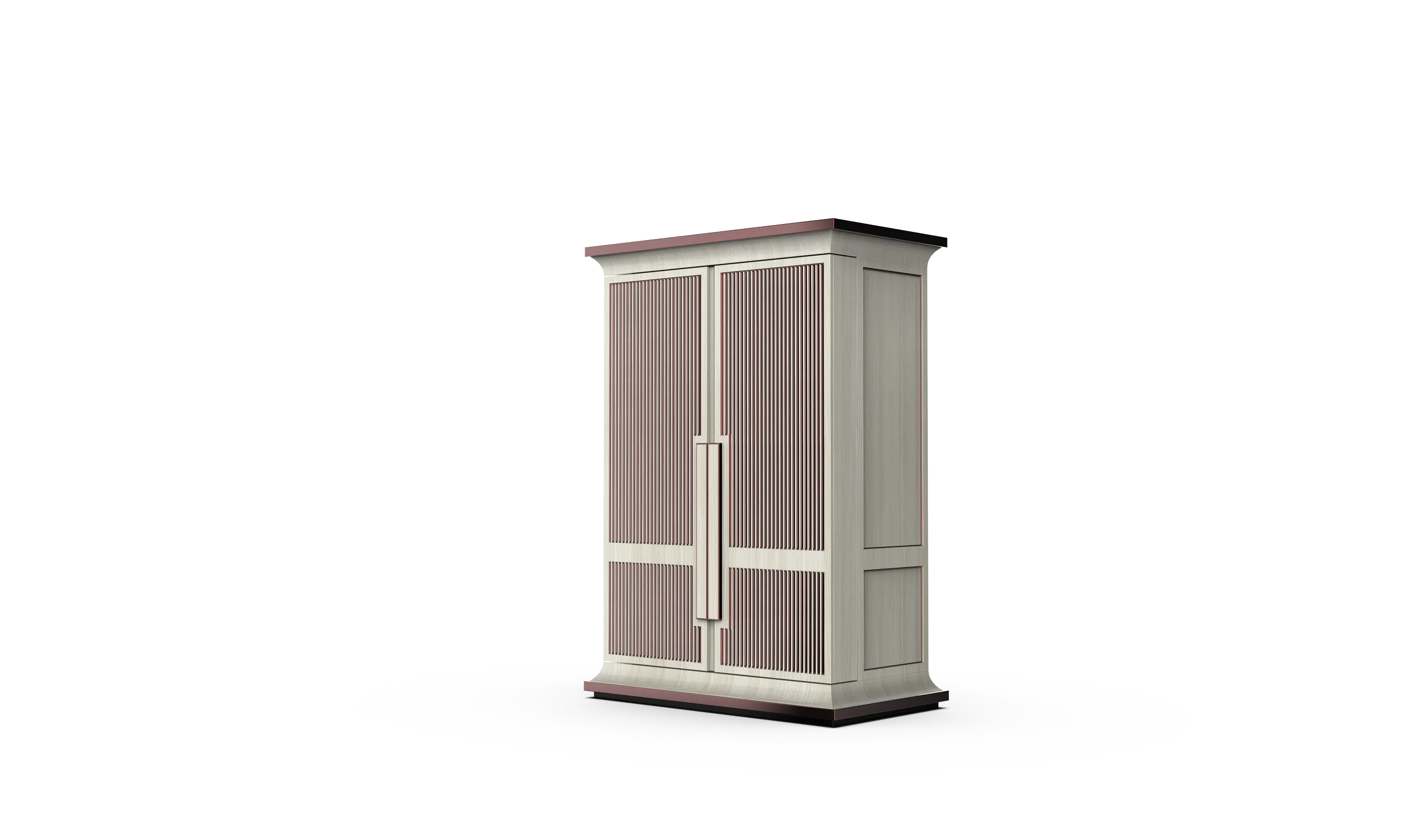
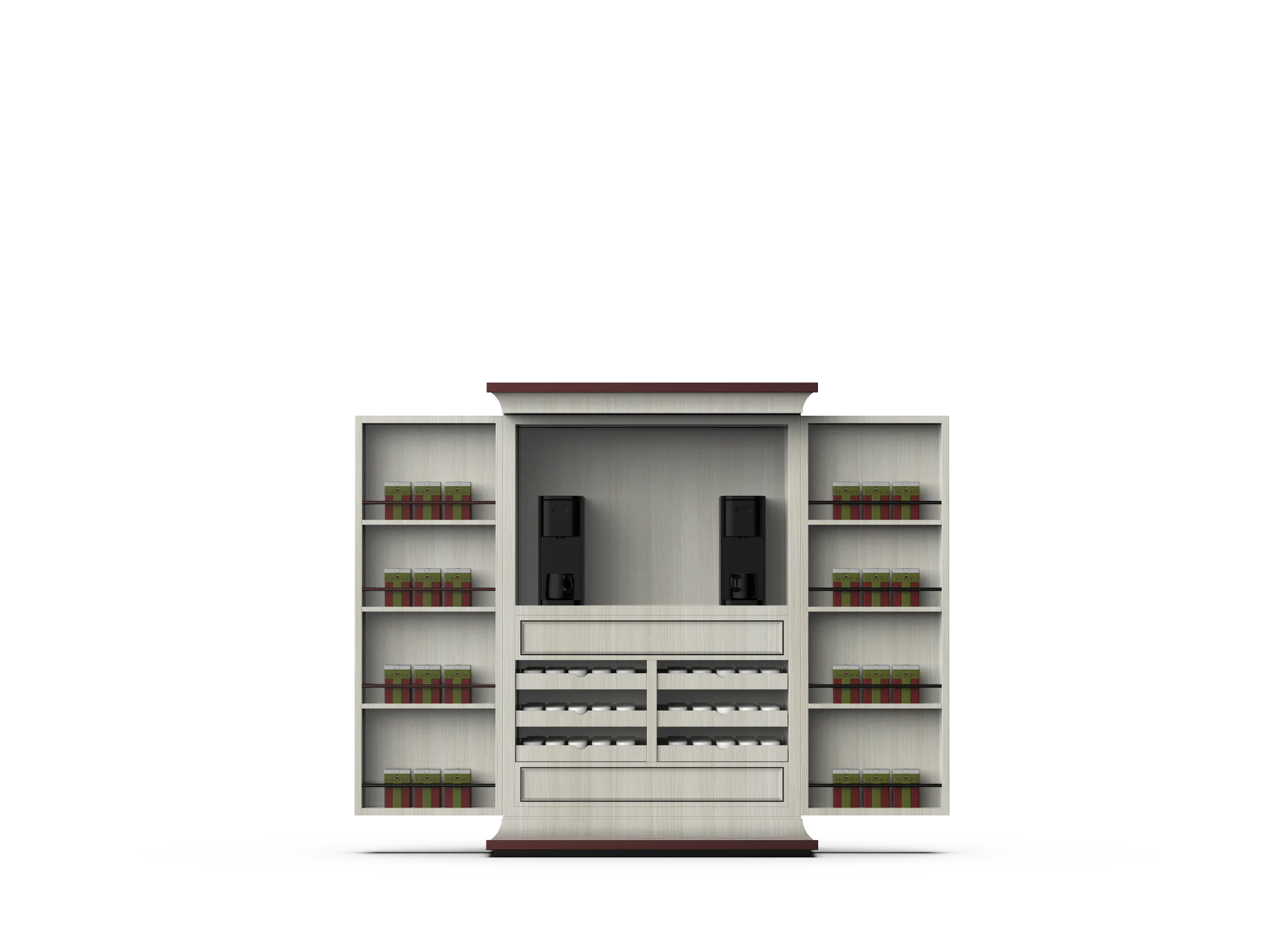
At 7:30 in the morning, a hotel lounge may be serving espresso and pastries. By noon, the same area can become a refreshment point for a meeting. By evening, it may need to welcome guests with cocktails. The room is not changing by itself—the service furniture has to make those transitions possible.
For hospitality projects, flexibility is often discussed as a feature. In daily operation, it is better understood as a habit: a team’s ability to reset a space smoothly, without compromising the atmosphere guests have come to expect.
Think in moments, not products
A mobile bar, service trolley, or coffee cabinet is most valuable when it has a defined role in the guest experience. Instead of asking, “Where can this unit be stored?”, begin with, “What moment does it support?” That small shift produces much more useful decisions about proportions, mobility, storage, and finish.
- Arrival: a coffee or refreshment point that gives a lobby purpose during the day.
- Transition: a compact trolley that brings service closer to a meeting breakout or event foyer.
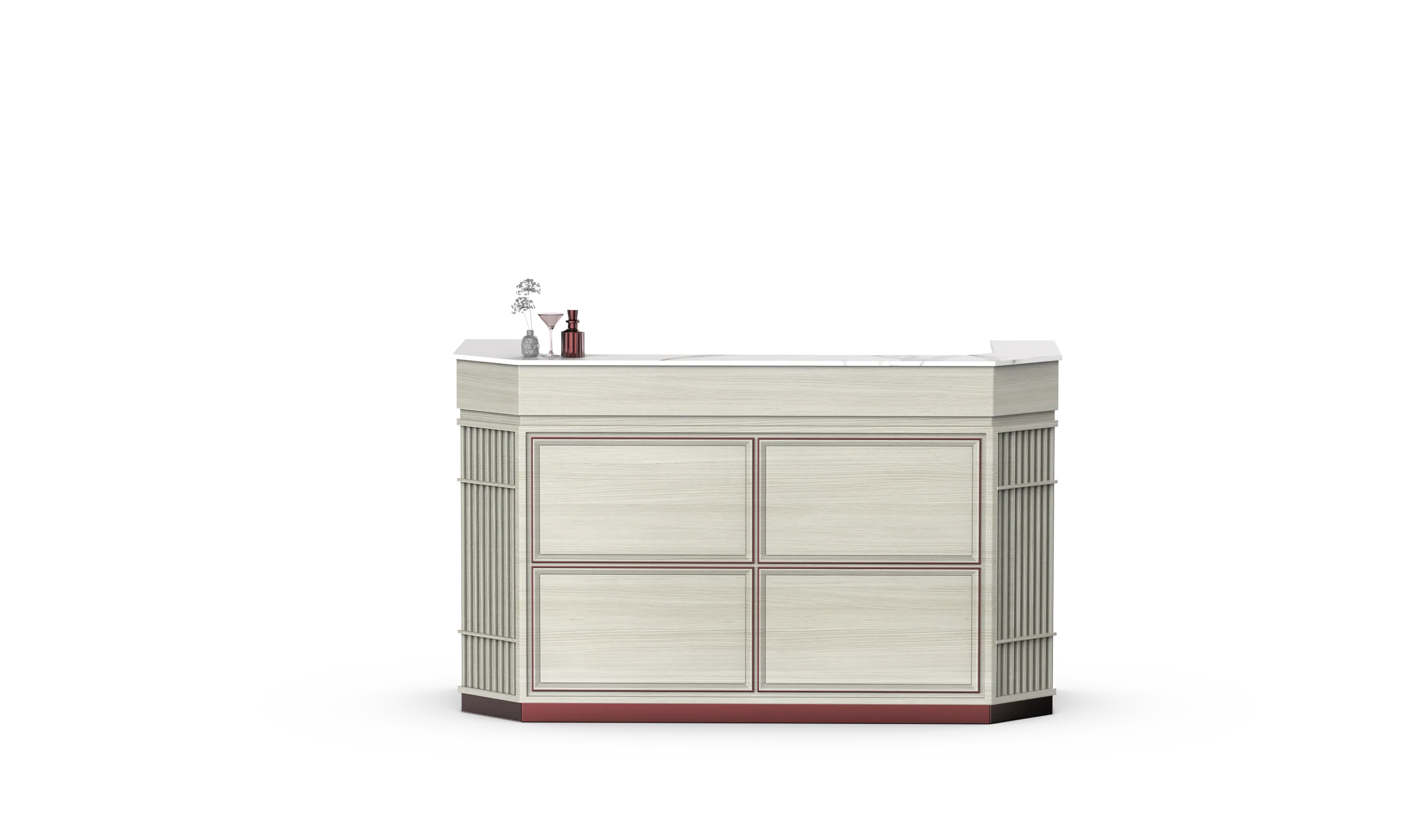
- Occasion: a bar or presentation unit that turns an ordinary corner into a social destination.
The reset is part of the design
Guests should see the finished setting, not the work of transforming it. This means the operational details matter: caster performance, braking, accessible storage, cable management, and handles that are comfortable for staff. It also means that a unit should look resolved from every side—not only from the front photograph.
When the product is designed for movement from the beginning, moving it between rooms becomes a normal service action rather than a disruptive task. That is particularly helpful in venues where the same public areas support breakfast, events, banquets, and evening service.
One palette, several functions
Flexibility should not make an interior feel temporary. A family of service pieces can take on different jobs while sharing a common material language—wood grain, stone-effect worktops, metal details, or a palette selected to complement the hotel’s interior. This consistency lets a coffee cabinet, a bar, and a trolley feel connected even when they are used in different rooms.
The payoff is not just visual. A coordinated range also helps the project team specify pieces with a clear hierarchy: larger units carry the main service function, while smaller pieces extend capacity exactly where it is needed.
Three questions before you specify
- Who moves it? Confirm the usual number of staff, travel routes, thresholds, lifts, and storage access.
- What changes during service? Consider where consumables, glassware, waste, power, and replenishment are handled.
- What must it become next? Plan for the next use of the room, not only the initial setup.
A quieter way to work harder
Well-planned mobile service furniture does not call attention to its flexibility. It simply helps a hotel feel ready: ready for a larger breakfast, a last-minute meeting, a cocktail reception, or a change in season. The effect is subtle but powerful—more possibilities from the same square metres, and a more considered experience for every guest.
DECHANT develops hospitality furniture for spaces that need to perform beautifully under changing conditions. Share your project brief with us and we can discuss a configuration tailored to your venue.