

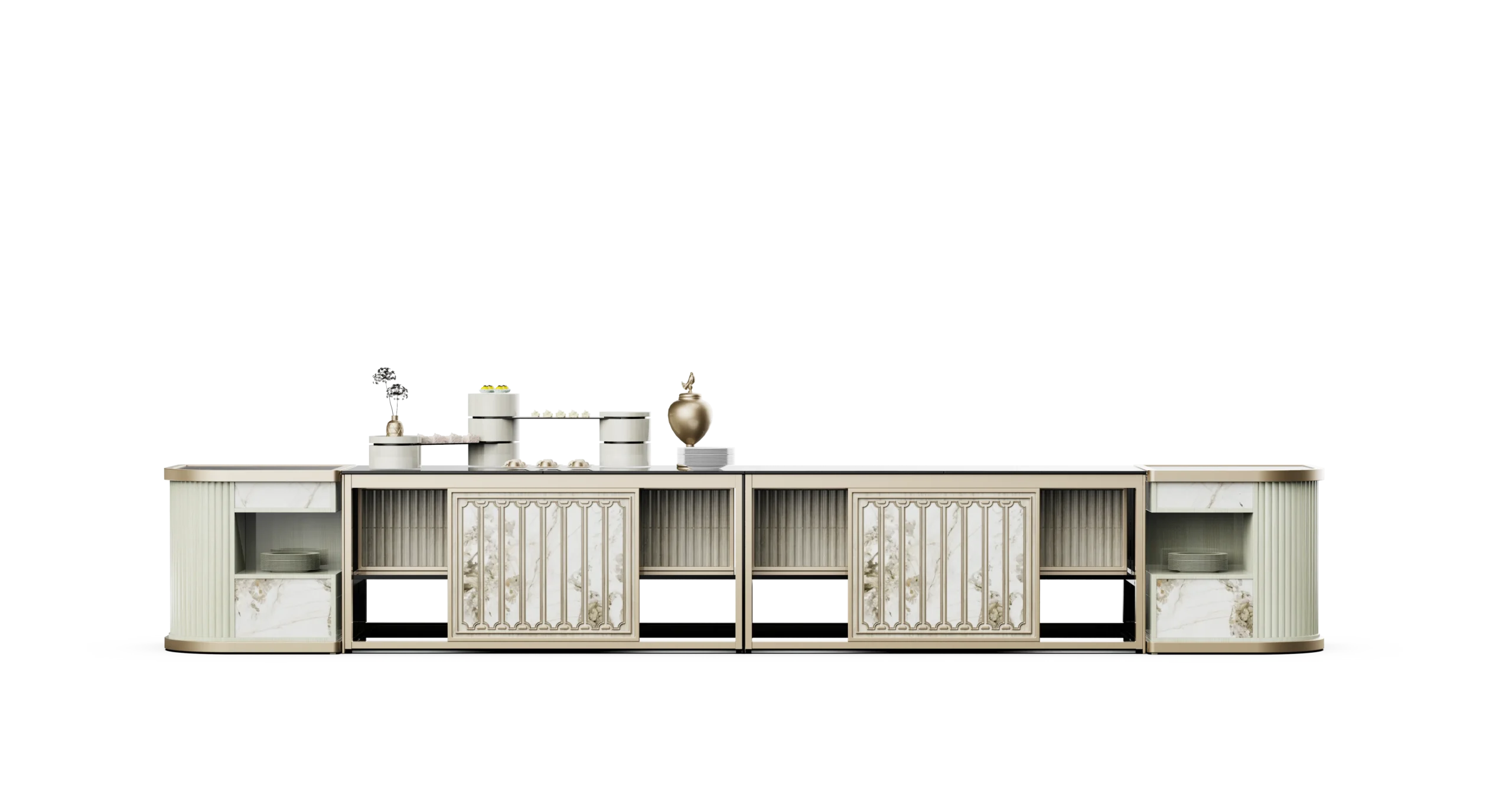
For high-end hotels and buffet restaurant operators, the choice of buffet stations can affect dining flow, space utilization, and day-to-day operations. As hotel dining environments become increasingly diverse, modular mobile buffet stations are becoming an option worth considering for hotel dining spaces.
But is a modular buffet station the right choice for your hotel? What factors should you consider when selecting one? This article explores modular buffet stations from the perspective of real-world applications, covering their design features, functional configurations, and key selection considerations.
1. Common Challenges in Hotel Dining Spaces
Many hotels face similar challenges when selecting buffet stations:
- Breakfast requires an efficient guest flow, while banquets may require a completely different layout.
- Tea breaks, themed events, weddings, and other temporary events often require greater flexibility than fixed equipment can provide.
- Limited space may need to accommodate multiple functions, including hot food, cold food, beverages, and desserts.
- Once a fixed buffet station is installed, future layout changes may involve additional renovation costs and construction time.
The underlying need is clear: hotel dining spaces can change according to different operational scenarios, so buffet equipment also needs to offer a certain level of flexibility.
This is one of the reasons modular mobile buffet stations have gained attention.
2. What Is a Modular Buffet Station?
A modular mobile buffet station is typically made up of multiple independent functional modules, with each module serving a specific dining function, such as an induction cooking module, flat surface module, ice well module, or noodle cooking module.
Compared with traditional fixed buffet stations, modular systems allow different modules to be combined and rearranged according to available space, menu requirements, and specific usage scenarios.
For hotels, this design approach can provide greater flexibility when planning and adjusting dining spaces.
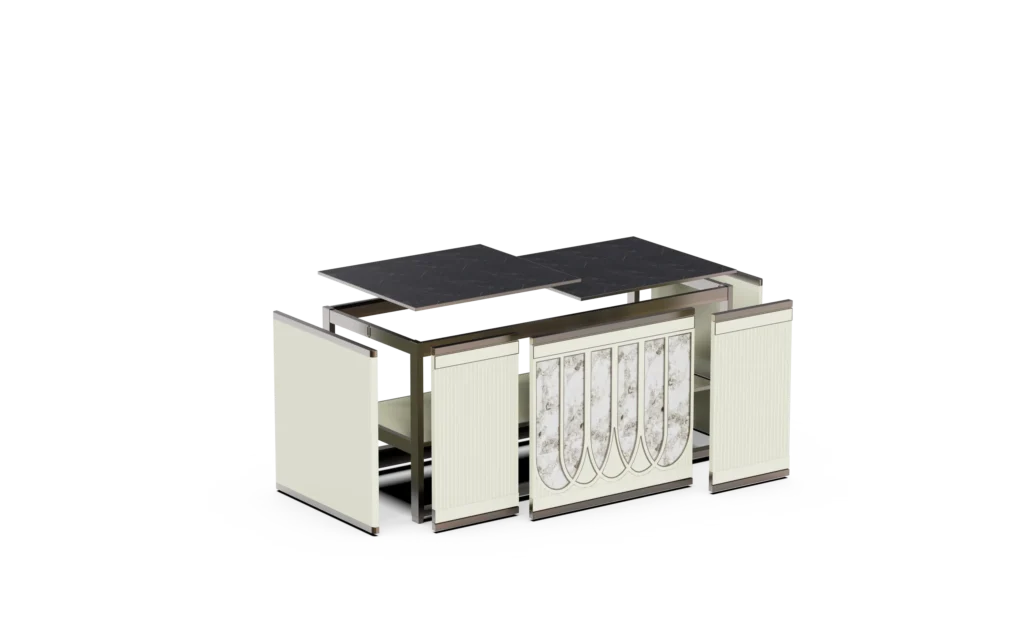
Key features of a modular buffet system include:
- Independent modular design
- Mobility and flexible reconfiguration
- Function-based configuration
- Consistent visual design
- Potential for future expansion
3. Modular vs. Fixed Buffet Stations: Key Differences
Before making a purchasing decision, it is useful to compare the two approaches across six key areas:
| Comparison | Traditional Fixed Buffet Station | Modular Mobile Buffet Station |
| Layout flexibility | Typically designed around a fixed layout | Can be rearranged according to requirements |
| Space utilization | Primarily designed for a fixed scenario | Can be configured according to space and function |
| Scenario adaptability | Relatively fixed | Better suited to multiple scenarios |
| Future expansion | Adjustments may involve overall renovation | Some systems can be expanded by adding modules |
| Cleaning & maintenance | Product position is relatively fixed | Mobility makes it easier to reposition |
| Initial investment | Usually configured as an overall solution | Can be configured according to actual needs |
Table 1. Key differences between modular and fixed buffet stations
4. What Functions Can Be Configured in a Modular Buffet Station?
Different hotels have different menus, guest volumes, and service methods. Therefore, the actual configuration should be adjusted according to the requirements of each project.
Common functional modules include:
- Induction Cooking Module
- Flat Surface Module
- Warming Plate Module
- Ice Well Module
- Roasted Meat Module
- Beef Module
- Dim Sum Module
- Soup Urn Module
- Noodle Cooking Module
- Sauce Warmer Module
- Cutlery & Auxiliary Accessories Module
5. Recommended Module Combinations for Three Typical Hotel Scenarios
Different scenarios require different module combinations. The following are reference configurations for three common hotel applications and can be adjusted according to the actual guest volume and menu.
Scenario 1: Hotel Breakfast Buffet
Recommended combination:
Induction Cooking Module + Warming Plate Module + Ice Well Module + Cutlery & Auxiliary Accessories Module
Key focus: Accommodate hot food, cold food, and cutlery service while improving guest flow and dining efficiency.
Scenario 2: Banquet / Wedding Buffet
Recommended combination:
Induction Cooking Module + Warming Plate Module + Ice Well Module + Dim Sum Module + Cutlery & Auxiliary Accessories Module
Key focus: Support a variety of hot food, cold food, and dessert presentations while maintaining an attractive overall display.
Scenario 3: Tea Break / Business Event
Recommended combination:
Flat Surface Module + Ice Well Module + Dim Sum Module + Cutlery & Auxiliary Accessories Module
Key focus: A lightweight configuration that allows the layout to be adjusted quickly according to the event requirements.
6. Why Is Mobility Important for Hotels?
Many purchasing teams ask: how much difference does a mobile buffet station really make compared with a non-mobile one?
In daily hotel operations, mobility can provide several practical benefits:
1. More Flexible Scenario Changes
After breakfast service, the buffet area can be rearranged according to the requirements of the next event.
2. Better Reuse of Event Spaces
Banquet halls, meeting spaces, and other areas can be adjusted according to different event arrangements.
3. Easier Daily Cleaning
A mobile design makes it easier for staff to clean around and underneath the product.
4. More Flexible Maintenance
When maintenance is required, individual modules can be moved separately without disrupting the entire buffet area.
7. What Should Hotels Consider When Purchasing a Modular Buffet Station?
For a high-end hotel, a buffet station is not simply a piece of equipment—it is also part of the overall visual design of the space.
In addition to functional specifications, hotels should consider the following factors:
1. Choose Functions According to the Dining Scenario
First determine whether the buffet station will primarily be used for breakfast, banquets, tea breaks, or multiple types of events.
2. Plan the Configuration According to Available Space
Consider the buffet station dimensions, aisle width, guest traffic flow, and staff replenishment routes.
3. Pay Attention to the Mobility System
Check practical specifications such as caster load capacity, braking systems, and overall stability.
4. Consider Materials and Design
The countertop, cabinet body, metal details, and colors should coordinate with the overall hotel interior design.
5. Plan for Future Expansion
If the hotel may require additional functions in the future, confirm in advance whether the system supports adding modules later.
6. Confirm Customization Capabilities
For example:
Dimensions | Materials | Colors | Functional Modules | Logo | Hardware Details
8. Frequently Asked Questions About Modular Buffet Stations
Q1: Are modular buffet stations always more expensive than fixed buffet stations?
Product costs can vary depending on dimensions, materials, functional configurations, and customization requirements. One advantage of a modular solution is that different modules can be configured according to actual needs. Therefore, purchasing decisions should take both initial requirements and future usage scenarios into consideration.
Q2: Can additional modules be added later?
Whether additional modules can be added depends on the structure and interface design of the specific system. Before purchasing, hotels can confirm the system’s future expansion capabilities with the supplier.
Q3: Are mobile buffet stations stable?
Professional mobile buffet stations are typically equipped with locking casters. Actual stability also depends on factors such as caster specifications, product structure, and load-bearing design.
Q4: Can modular buffet stations be customized?
Hotel projects can typically discuss customization options such as dimensions, materials, colors, logos, and functional configurations according to project requirements. Specific customization options should be confirmed based on the individual project.
9. DECHANT: Modular Solutions for Hotel Dining Spaces
DECHANT specializes in hospitality furniture and related products, providing product design, functional planning, and customization services for hotels, buffet restaurants, banquets, and other dining spaces.
From mobile buffet stations to tea break furniture and service carts, DECHANT focuses not only on individual products but also on how products integrate into hotel spaces and real-world operational requirements.
For hotel projects that need to balance functionality, space, and design, modular design can provide a more flexible approach to product planning.
Planning a hotel dining space?
Contacto DECHANT and tell us about your space dimensions, usage scenarios, and functional requirements. We can discuss suitable module combinations and customized solutions based on your project needs.